
Debt consolidation trends: How borrowers are managing and paying down debt


The cash crunch is real: U.S. consumer debt reached $5.16 trillion in the first quarter of 2026 and inflation continues to rise. The credit agency TransUnion® recently reported that Americans’ required monthly debt payments are “consuming more household income and reducing financial resilience.”
So borrowers are thinking hard about how to make their money go farther. One tool that can help restore financial resilience is debt consolidation, which often lowers monthly credit card and loan payments.
To better understand whether ordinary borrowers might benefit from consolidation, SoFi asked more than 1,500 people to weigh in. This 2026 Debt Consolidation Trends survey provides a glimpse into U.S. consumers’ relationship with their loans and debt management: how much they owe and to whom, how long they expect to be in debt and what strategies they may pursue to resolve it.
Key Findings
- Almost nine in 10 consumer debt survey respondents (87%) report that credit cards are their main source of debt.
- Two-thirds (67%) of borrowers in SoFi’s survey carry between $10,000 and $50,000 in total debt. The largest category (35%) is people owing $10,000 to $25,000.
- Almost 64% of respondents say high interest rates are the biggest challenge they face in dealing with debt; for 18%, emotional stress is their top problem.
- Most borrowers (58%) expect to be paying off their debt for at least the next 12 months.
- If lower monthly payments were to free up some extra cash, 59% would prioritize paying down their debt faster, rather than spending the windfall.
- When considering consolidation, borrowers worry most often about hidden fees and taking on additional long-term debt.
Introduction to Debt Consolidation Trends
As the name suggests, consolidation gathers all of your consumer debt into one loan. Consumer debt is credit card debt, personal loan debt and similar unsecured debt; it does not include your home loan, if you have one. The most common types of debt consolidation loans are personal loans and balance-transfer credit cards.
Many balance transfer cards offer low or zero-percent interest for a given introductory period, which can give you a break on financing charges as you get your money reoriented. Consumers not in a position to pay down debt quickly during a brief window of time often prefer personal loans for debt consolidation.
Another benefit of debt consolidation: Your debt management is more efficient, because you have fewer payments to make each month.
Credit Card Debt Is the Most Common Type of Debt
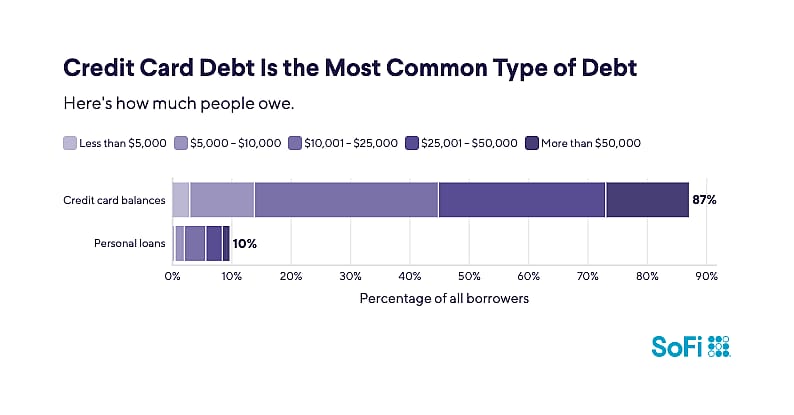
In our survey, the vast majority (87%) of survey respondents said credit card balances are their main source of debt. Of these people, 84% owe more than $10,000, with more than two-thirds of respondents (68%) owing between $10,000 and $50,000.
Roughly 10% of those surveyed named personal loans as their primary type of debt.
Most Borrowers Carry Between $10,000 and $50,000 in Debt
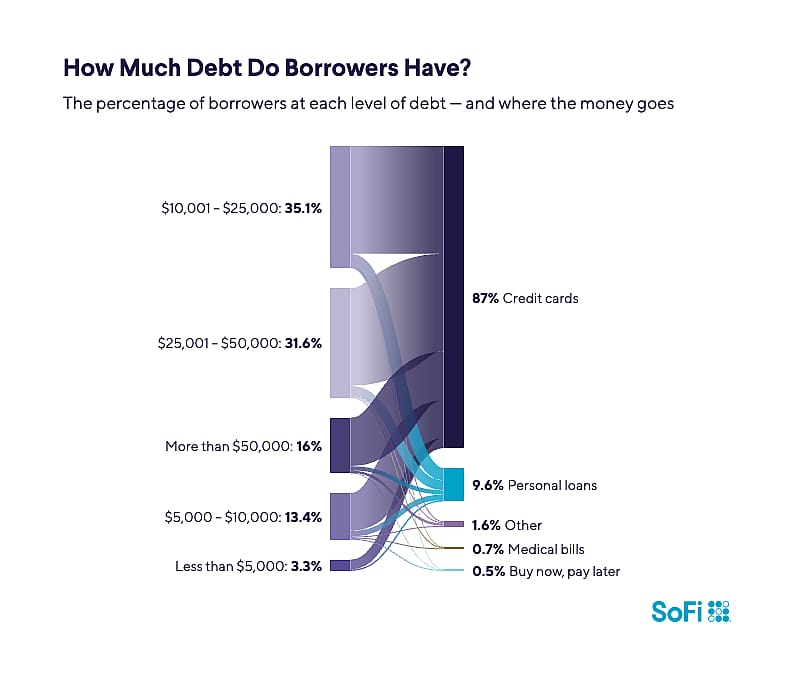
More than one-third of people surveyed (35%) said they currently owe between $10,000 and $25,000 across all their forms of debt; roughly another third (32%) have debt loads between $25,001 and $50,000. Sixteen percent reported owing more than $50,000.
Many Borrowers Are Managing Multiple Monthly Payments
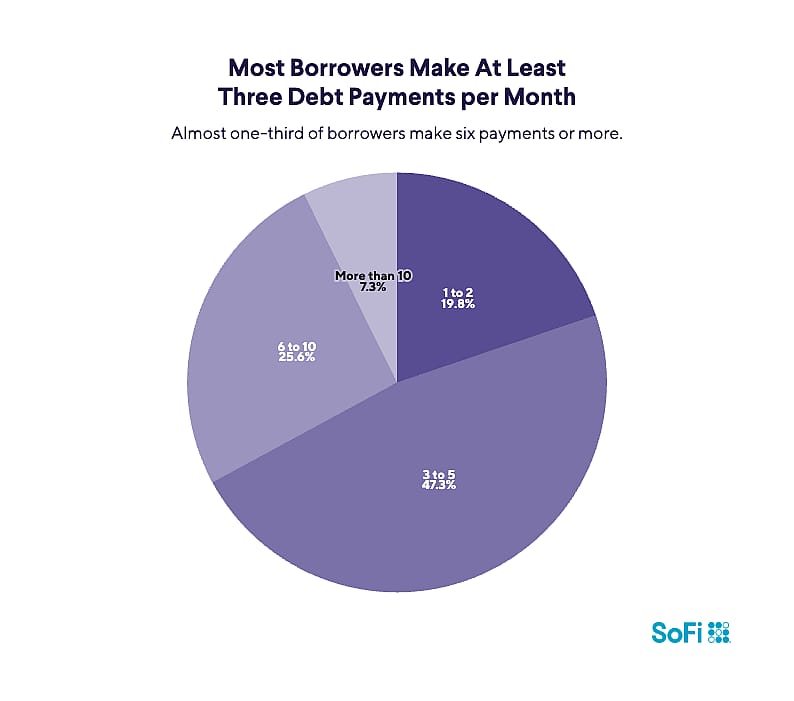
Almost half of respondents (47%) say that managing their debt requires three to five different payments per month. About one in four people say they juggle between six and 10 payments each month. Close to 20% make only one or two, while 7% make more than 10.
Tracking a slew of payment due dates and outstanding balances can be a real burden, one that consolidation can ease right away. For example, recent graduates may be better able to streamline and plan their payments by consolidating student loans and credit card debt.
High Interest Rates Are the Biggest Challenge for Borrowers
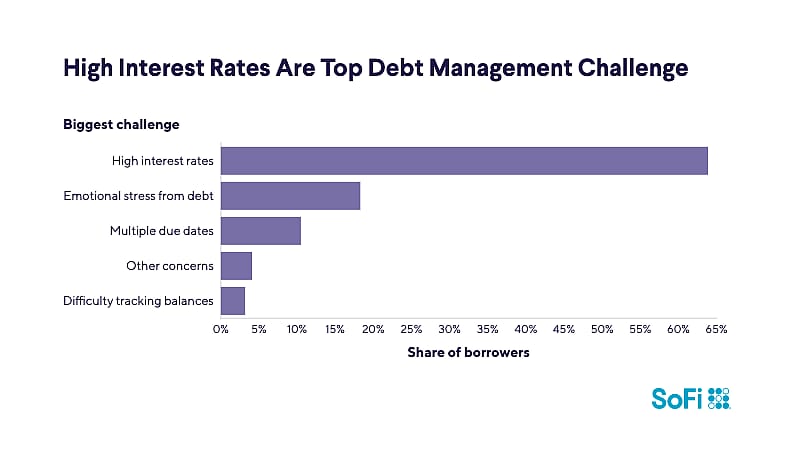
Almost two-thirds (64%) of SoFi debt survey respondents point to high interest rates as the biggest challenge in managing their debt. That’s no surprise, with almost nine out of 10 respondents reporting their primary source of debt is credit card debt — usually the most expensive way to borrow. Paying the highest rates are borrowers with credit scores below 700,, who make up almost 38% of respondents.
Relatedly, almost one in five (18%) borrowers say the emotional stress caused by debt is their toughest hurdle. Borrowers who owe between $25,000 and $50,000 were most likely (20%) to highlight stress.
Most Borrowers Have Not Consolidated Their Debt Before
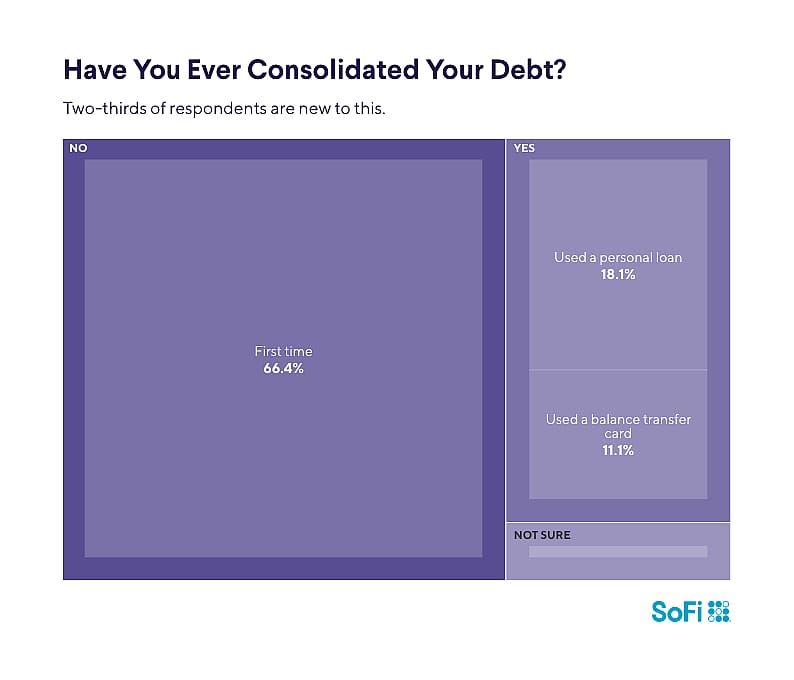
Two out of three borrowers (66%) in our survey reported that debt consolidation would be a new financial move for them. Of these newbies, more than three-quarters (78%) make at least three different debt payments each month and 30% send out at least six, meaning that, if nothing else, debt consolidation would likely simplify their financial routine.
Borrowers thinking about debt consolidation may want to begin with a full picture of their current situation. A debt consolidation calculator can be useful for that. Users put in the various balances they owe and record the interest rate on each one; the tool then estimates the payoff time for the entire sum. It shows the potential value of refinancing the entire debt at one fixed, consistent interest rate.
Previous Debt Consolidation Methods Used
Those who have gone the consolidation route in the past -– roughly 30% of respondents — have mostly used personal loans (62% of consolidators, or 18% of all borrowers). The rest (38% of consolidators, or 11% of all borrowers) opted for balance-transfer credit cards.
Many Borrowers Lack Confidence in Paying Off Debt Within a Year
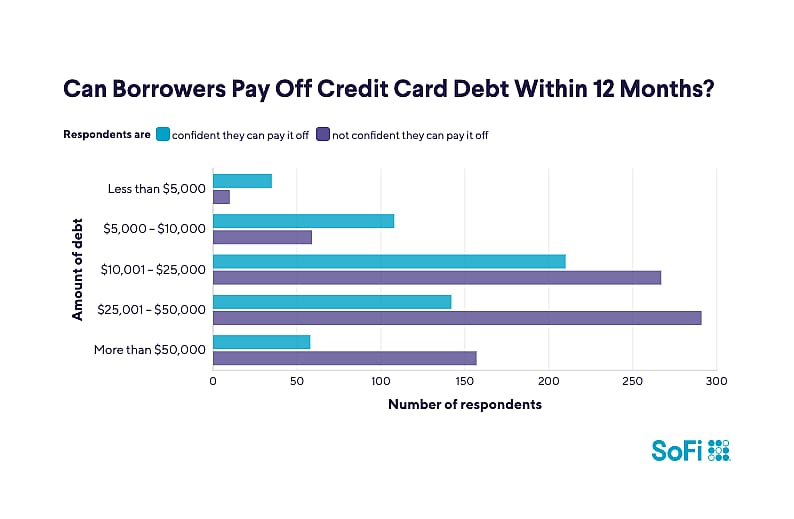
The majority of borrowers in SoFi’s survey (58%) believe that they won’t be able to repay their debt in the next 12 months. More than one-third (35%) are “not very confident,” and almost one-quarter admit they’re “not confident at all.”
When the debt is $10,000 or less, two-thirds of people (68%) express confidence they can pay it off within a year. That proportion is reversed among people owing $25,000 or more: Almost 70% of these borrowers expect to need more than a year to retire their debt.
Most Borrowers Have Good to Fair Credit Scores
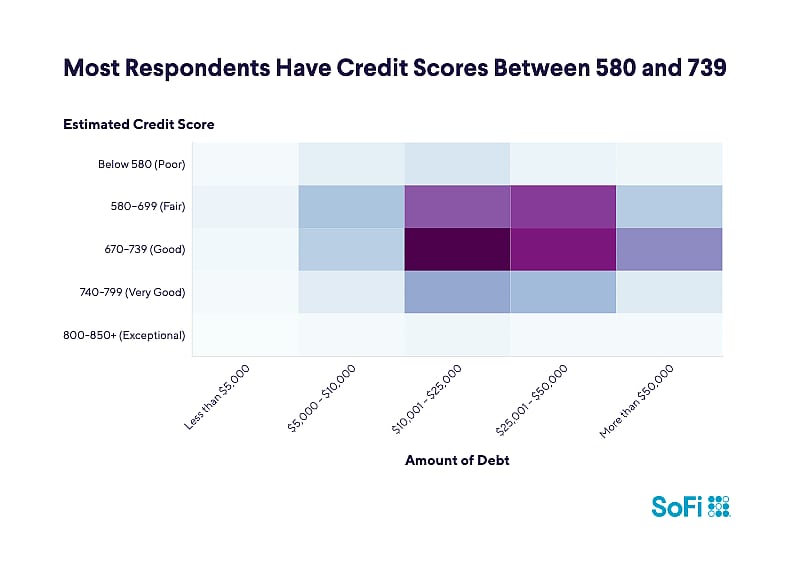
Credit scores largely determine the interest rates borrowers must pay on their debt. In SoFi’s survey, more than 88% of respondents reported scores between 580 and 799, spanning the fair, good, and very good categories. Overall, about two in five (40%) respondents have good scores, almost one-third (32%) report fair scores, and 17% have very good scores.
Unsurprisingly, there are far fewer people at the extremes. Just 3% have scores above 800 (“exceptional”), while 7% have scores below 580 (“poor”).
Borrowers Prioritize Paying Off Debt Faster With Extra Cash
If their monthly debt payments were lower, about three in five borrowers (59%) say they’d use the freed-up cash to pay down their principal faster.
Especially for credit card debt and other forms of revolving credit, that’s a smart move. The more you can pay down your principal, the less interest you’ll owe. Money that used to go toward interest can then be applied to paying down the principal even faster, lowering interest even further, and so on. Borrowers can choose between the snowball method and the avalanche method as they utilize funds to pay down debt.
More than one-quarter (26%) of survey respondents would put the money into savings accounts, while about 10% would use it to help cover everyday expenses. Only 0.3% said they’d spend the cash treating themselves or their family.
Among borrowers owing less than $5,000, not a single person surveyed said they would invest the extra money or use it to grow their wealth. Instead, 45% of this group -– by far the highest percentage of any debt tier — would channel it into building their savings. Borrowers who don’t already have an emergency fund would be wise to earmark savings for that.
“An emergency fund is intended to be used at a moment’s notice. For the most part, you’ll hear that a healthy emergency fund should cover between three and six months worth of living expenses — which would include rent, mortgage, bills, food, and other essentials. And since you never know when an emergency might happen, it’s best to keep your fund relatively liquid,” says Brian Walsh, CFP and head of advice & planning at SoFi.
Hidden Fees and Long-Term Debt Are Top Concerns
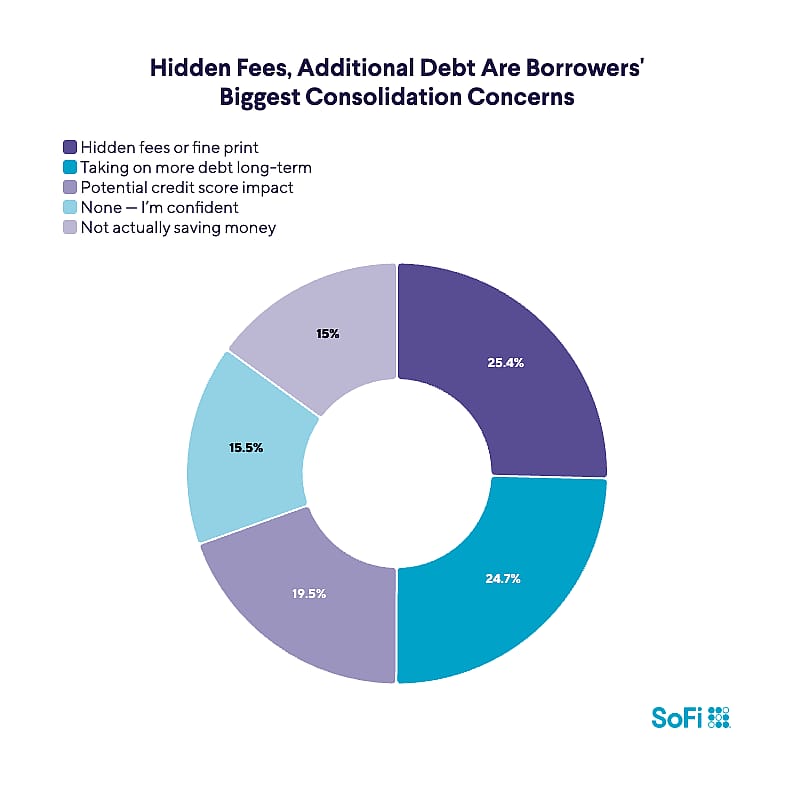
Borrowers who expressed uneasiness about debt consolidation pointed to a variety of reasons, with no single reason predominating.
Approximately one-quarter of people worry about taking on more debt long-term. A similar share cited concerns about fees or other costs hidden in the contracts’ fine print. Roughly 20% (19.5%) had qualms about the potential impact on their credit score, while 15% feared that debt consolidation wouldn’t end up saving them any money.
An optimistic 16% of respondents found no cause for concern.
The Takeaway
Among SoFi Debt Consolidation Trends Survey respondents, credit card debt is by far the most prevalent type of debt. Given the widespread burden of high interest rates, many borrowers doubt they’ll be able to pay off their balances in the near term.
Borrowers who might free up extra money through debt consolidation would be more likely to pay down their principal than spend the cash on discretionary items. Still, many respondents are cautious about consolidation, fearing hidden fees and the prospect of additional long-term debt. Seeking out interest rates and loan terms from prospective lenders can help borrowers determine whether consolidation is the right move.
Credit cards have an average APR of 20%–25%, and your balance can sit for years with almost no principal reduction. Personal loan interest rates average 12.00%, with a guaranteed payoff date in three to seven years.
Methodology
This online survey of 1,537 adults based in the United States was conducted in April 2026.
This story was produced by SoFi and reviewed and distributed by Stacker.


